
Apple Inc's iPhones assembled in India achieved market revenues of Rs 162,000 crore. Tata Steel's revenue for the same period was Rs 162,324 crore.

There's no change in Apple Inc's India strategy, said a top government source. 'It can only be enhanced'.

Of the Rs 1.97 trillion that the government intends to spend on all 14 production-linked incentive (PLI) schemes, around Rs 41,000 crore remains unutilised as of now, according to a senior government official. This means that 80 per cent of the total allocated amount, or Rs 1.56 trillion, will be used to pay incentives to companies eligible to claim benefits over the next few years. The unutilised amount/savings result from undersubscription, lukewarm responses in the case of schemes such as textile, as well as a reduction in the allocation of schemes.

Smartphones, for the first time, emerged as India's largest individual export commodity by value over 10 months of any financial year, during the April-January period of FY25, based on harmonised system (HS) codes. During the period under review, smartphone exports from India reached $18.31 billion, according to data from the Department of Commerce, surpassing automotive diesel fuel exports, which stood at $16.04 billion.

Kant, a retired 1980-batch Indian Administrative Service (IAS) officer of Kerala cadre, was appointed as India's G20 Sherpa in July 2022, months before India assumed the G20 Presidency.

Any industrial policy is only as good as how it is applied and the other reforms that support it. This was as true 40 years ago as it is now, points out Debashis Basu.

The government's two-year-old production-linked incentive (PLI) for air conditioner (AC) components has boosted domestic production, with average value addition or localisation increasing from 25 per cent to 55 per cent now, according to the scheme's beneficiaries. Last year, 10 million ACs were manufactured and sold in India and the number is expected to reach 14 million in 2024, according to industry estimates. Domestic production is expected to hit 30 million by 2030.

In the hottest sector of AI, where most global VC funding is going currently, the country's record has not been anything to write home about.

Dalal Street minnows stole the show in 2024, giving handsome returns to investors, helped by a largely optimistic trend in the stock market and impressive retail investors' participation. Analysts attributed the positive trend in the equity markets, where the benchmark indices shattered many records this year, to robust domestic liquidity, strong fundamentals of the Indian economy, and policy continuity.

Exporters on Thursday demanded fiscal incentives, tweaking in customs duties on certain products and credit at affordable rates in the forthcoming Budget to boost exports and create jobs. In a pre-budget virtual meeting with Finance Minister Nirmala Sitharaman, the Federation of Indian Export Organisations (FIEO) said the depreciation of the rupee against the US dollar is affecting exports' competitiveness and the sector requires more support. "Creation of employment is the biggest challenge faced by the country...We would urge the government to provide fiscal support to units which provide additional employment in the export sector," the exporter's body said.

'We are increasing our footprint, but other markets also compete - like Indonesia or Vietnam.'

Brave statements such as we will continue to be the fastest growing large country are of no consolation, because the direction of trade also determines the flow of investment, points out M Govinda Rao.

Hero MotoCorp is expecting its electric vehicle (EV) business to break even once it reaches monthly sales volumes of 25,000 to 30,000 units, which is a couple of years away, Chief Financial Officer (CFO) Vivek Anand said on Tuesday. "This year, in 2024-25 (FY25), if I really look at my EV performance, our volumes have grown by 200 per cent," Anand told analysts during the company's post-results conference call.

A day ahead of the interim Budget, India slashed import duty on spare parts, like battery cover, lens and SIM socket, used in mobile phone manufacturing to 10 per cent, from 15 per cent. The duty cut is aimed at boosting local production and exports, as well as reducing prices in local markets. The finance ministry on January 30, notified the cut in duty on all goods for use in manufacture of cellular mobile phones to 10 per cent.
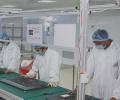
Leading home-grown companies - Dixon Technologies (India), Amber Enterprises India, Tata Electronics, Chennai-based Munoth Industries, and Murugappa Group - along with global majors such as Japan's TDK Corporation, Taiwan's Hon Hai Technology Group (Foxconn), Austria's AT&S Austria Technologie & Systemtechnik AG (AT&S AG), and Japan's Murata Manufacturing Co, among others, have expressed initial interest in participating in the Rs 22,919 crore production-linked incentive (PLI) scheme cleared by the Union Cabinet, according to those privy to stakeholder discussions with the government.

'I was in the US, where I met top executives of HP and Dell, and they are very keen to come to India.' 'Acer and ASUS have also evinced interest.'

While presenting the Budget for 2022-23, the finance minister also said the strategic transfer of Air India ownership has been completed and strategic buyer for (Neelachal Ispat Nigam Ltd) NINL has been selected. National Asset Reconstruction Co Ltd (NARCL) has commenced its activity, Sitharaman added.

India's trade deficit with China neared $100 billion in FY25, amid escalating concerns of dumping, data released by the commerce department on Wednesday showed. Chinese imports rose by 11.5 per cent to $113.45 billion, while outbound shipments to the neighbouring country saw 14.5 per cent contraction to $14.2 billion.

'As long as Sebi maintains transparency and market stability, the Jane Street episode is unlikely to deter long-term foreign capital.'

Tata Motors (TaMo) is aiming to gain market share across its passenger vehicle (PV) and commercial vehicle (CV) businesses - targeting a 40 per cent share in CVs and a 16 per cent share in PVs by 2027. Meanwhile, it has already achieved earnings before interest, tax, depreciation, and amortisation (Ebitda) breakeven in its electric vehicle (EV) business at 1.2 per cent (up 830 basis points), ahead of its target of 2025-26 (FY26).

As many as 19 firms, including Reliance Industries Ltd (RIL), Adani Group and Tata have evinced interest for setting up solar manufacturing units under a production linked incentive scheme of the government. In April this year, the Union Cabinet approved a Rs 4,500 crore production linked incentive (PLI) scheme to boost domestic manufacturing capacity of solar PV modules. The scheme is aimed at adding 10,000 MW manufacturing capacity of integrated solar PV modules entailing direct investment of Rs 17,200 crore.

The Air India board has decided to reduce by 50 per cent the productivity-linked incentives or flying allowance payable to its employees.

Hero MotoCorp Ltd (HMCL) has been the best-performing auto stock over the last three months, gaining over 17 per cent during this period. Multiple tailwinds, especially on the rural front, are expected to boost its volumes. In addition to the demand drivers, new launches too should help drive growth both in the commuter and premium motorcycle categories.

India's Foreign Secretary Vikram Misri has underscored the importance of not equating the victims and perpetrators of terror attacks, highlighting the need for global unity in combating terrorism. Speaking at Raisina Tokyo 2025, Misri expressed appreciation for Japan's support following the recent terror attack in Pahalgam, India. He also cautioned against the trend of some Western countries hyphenating India and Pakistan in the context of their recent military confrontation. Misri further outlined India's economic aspirations and its commitment to becoming a factor of stability in a turbulent world.

So far this year, around 839,545 electric vehicles have been sold, accounting for approximately 6.69% of the total 12,541,684 vehicles sold.

The government on Monday extended the period of production-linked incentive scheme for large-scale electronics manufacturing with a focus on mobile phones by a year until 2025-26. The base year of the scheme 2019-20 remains the same but the companies will have the option to choose their five-year period either from the base year or the year 2020-21 for calculation of the incentives under the scheme. "Now we have extended the tenure of the scheme from 2020-21 to 2025-26. "Earlier, it would have ended in 2024-25.

'Our problem is not a budget deficit but a trust deficit. We need to trust our institutions and industries to innovate and lead. That is the way forward for India.'

The upcoming Union Budget to be presented on February 1 is likely to assume a nominal gross domestic product (GDP) growth between 10 and 10.5 per cent for FY26, a Business Standard poll of 10 economists showed. The first advance estimates released by the National Statistics Office (NSO) had estimated a nominal GDP growth of 9.7 per cent for FY25. Nominal GDP, calculated at current market prices, factors in the effect of inflation. It is used as the base to calculate crucial macroeconomic indicators, such as fiscal deficit, revenue deficit, and debt-to-GDP ratio.

After declining to a three-year low in FY24, the private sector investment is expected to fall further in the current financial year, India Ratings said in a research note.. The investments in the private sector are likely to plummet to below 11 per cent of the GDP in FY25, based on the trends from the latest national accounts data and company fillings, it noted.

He argued that if inflation is low, stable and moving towards the 4 per cent target, why has the RBI not revised downward the bank rate fixed in June 2023?

Both new and completed project values as of December 2024 remain below pre-pandemic levels seen in 2019.

Several multinational medical device makers are focusing on deepening their presence in India by expanding their local manufacturing footprint and research capabilities, a move that can catapult India into a strategic hub for the medical technology (medtech) industry. Among those increasing their reach in the country are Siemens Healthineers and Philips, signalling a broader shift from India being only a sales destination to becoming a global production and innovation base.

Since the start of this financial year (FY24), the stock of Aurobindo Pharma has been one of the top pharma gainers, enhancing investor wealth by over 68 per cent, with a third of those gains coming in the last three months. The stock is riding on multiple triggers given its investments in the production-linked incentive or PLI scheme, biosimilars, injectables and vaccines, which should drive revenues and profits over the medium term. Better than expected performance after the June quarter results led to a revision of earnings estimates for FY24 and FY25.

'The government is actively engaging with EU to ensure that concerns of Indian companies and hard-to-abate sectors are adequately addressed under CBAM'

Following the lacklustre growth numbers in the second quarter (Q2FY25), economists believe the upcoming Union Budget for 2025-26 should focus on reforms that will stimulate consumption, manufacturing and spur employment. India's growth unexpectedly slowed to 5.4 per cent in the second quarter, due to low capital formation, weak consumption, besides adverse weather impact.

The Ministry of Electronics and Information Technology (Meity) is looking at a proposal to generate 1.5-2 direct jobs for every Rs 1 crore invested by companies under the proposed electronic components production-linked incentive (PLI) scheme. If this plan fructifies, a Rs 10,000 crore investment under the proposed PLI scheme would bring with it the expectation of creating 15,000-20,000 direct jobs in electronic components sector.

A task force set up by the Ministry of Electronics and Information Technology (Meity) for transforming India into an "electronic and semiconductor products" nation is on the verge of finalising its report, which is likely to recommend an allocation of Rs 44,000 crore between 2024 and 2030 to support homegrown companies in their quest to develop products and build global brands. The task force's recommendations include significant incentives: Rs 15,000 crore dedicated to electronic products (systems), Rs 11,000 crore for semiconductor products, and Rs 18,000 crore for various other incentives such as talent development, common infrastructure, logistics, and technology & IP (intellectual property) acquisition, a member of the panel revealed.

"I took some time to explore the contours of this initiative. I don't use the term 'game-changer' too often but it's apt in this case. For me, what's much more important than the mechanics of the scheme is the dramatic shift it signals in the attitude towards industry," Mahindra said in a tweet.

The Centre on Wednesday scrapped the mandatory human safety tests for electric vehicle (EV) batteries required to qualify for incentives under various government schemes. The ministry of heavy industries, in its fresh guidelines, has made compliance with the ministry of road transport and highways (MoRTH's) prevailing EV battery testing standards the only requirement to get incentives under the Centre's various incentive schemes.

International Monetary Fund (IMF) Deputy Managing Director (MD) Gita Gopinath has condemned the "terrible and disturbing" incident of rape and murder of a trainee doctor in Kolkata. "Personally, it is terrible to have any event of this kind. It is disturbing," she told Business Standard in New Delhi.
